Warehouse jobs in the USA give you steady work in an industry that keeps stores, factories, and online orders running.
You can start even if you do not have a college degree, as many roles are open to beginners willing to learn and work hard.
By entering this field now, you position yourself to grow into higher-paying logistics and supervisory roles over time.
What Do Warehouse Workers Do?
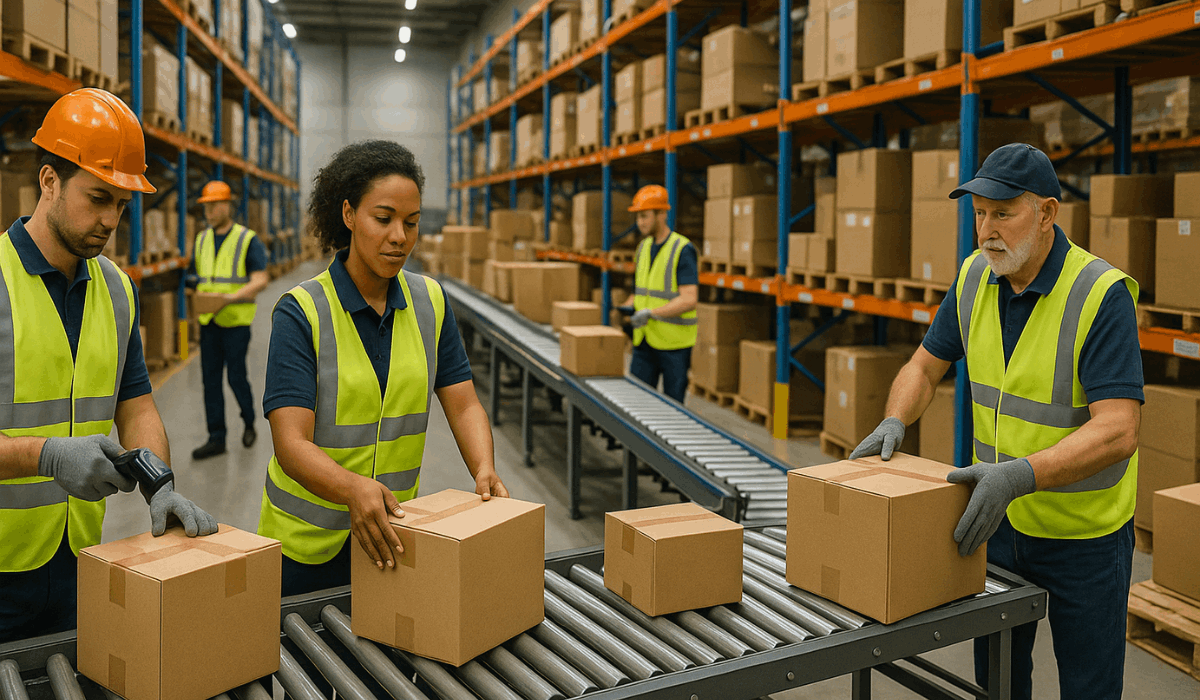
Warehouse workers keep goods moving so orders arrive on time. Tasks mix physical work, simple tech, and safety rules.
- Pick customer orders – You find items on shelves and collect them with pick lists or scanners.
- Pack and label products – You box items, add padding, and put on shipping labels.
- Load and unload trucks – You move pallets and boxes on and off vehicles, sometimes with pallet jacks or forklifts.
- Organize and restock inventory – You put items back in the right spots and help keep shelves in order.
- Use scanners and software – You scan barcodes and follow simple on-screen steps.
- Check product quality – spot damaged or incorrect items and report them.
- Keep the area clean and safe – You clear trash, keep paths open, and use required safety gear.
- Support the team – You assist co-workers when it is busy and share issues quickly.
Types of Warehouse Roles
Different warehouse roles handle specific tasks, from moving goods to guiding teams. Knowing these positions makes it easier to match skills to the right job.
- Warehouse Associate / General Laborer – Handles basic picking, packing, loading, unloading, and cleaning.
- Picker/Packer – Finds items for orders, checks accuracy, and packs boxes for shipment.
- Material Handler – Moves pallets and boxes throughout the warehouse using pallet jacks or other equipment.
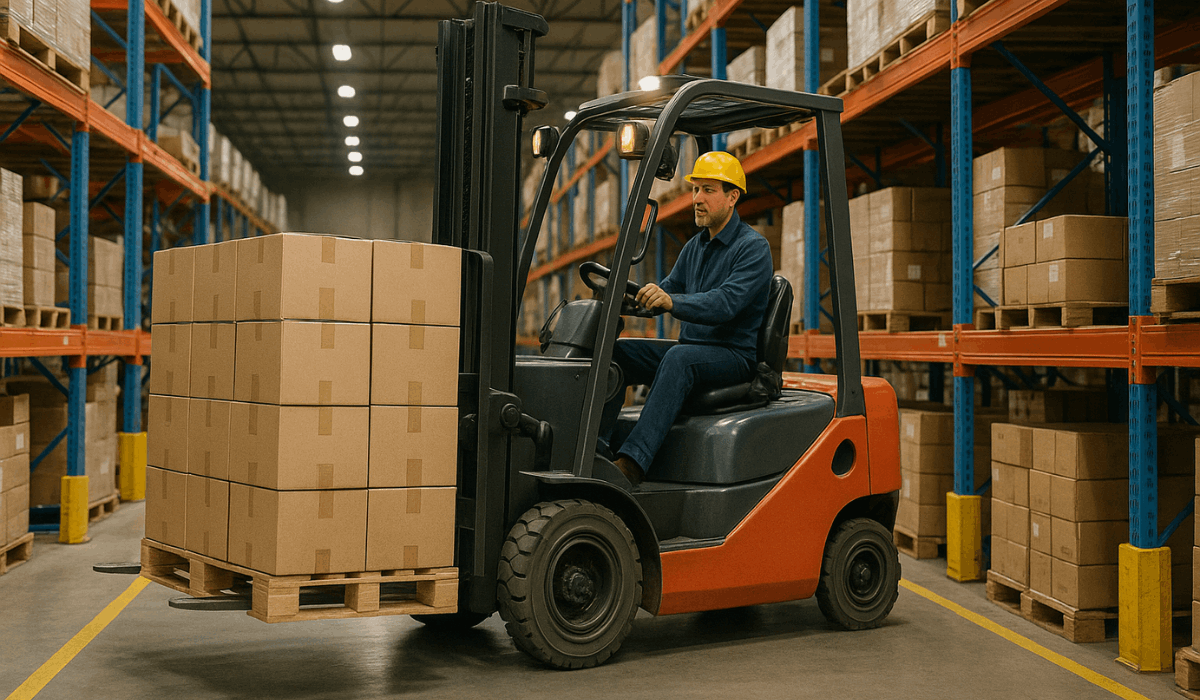
- Forklift Operator – Uses forklifts to lift, stack, and move heavy pallets in racks and docks.
- Inventory Clerk / Stock Controller – Counts stock, updates records, and checks differences in inventory.
- Shipping and Receiving Clerk – Reviews incoming and outgoing shipments, documents, and labels.
- Quality Control Inspector – Checks products for damage or errors and reports issues.
- Lead Hand / Team Leader – Directs small teams, assigns tasks, and supports daily targets.
- Warehouse Supervisor / Manager – Manages operations, staffing, safety, and performance for the site.
Entry-Level vs Experienced Warehouse Positions
Warehouse roles range from basic entry-level tasks to advanced equipment and team duties, showing where you can start and grow.
- Entry-Level: Warehouse Associate / General Laborer – Picks, packs, loads, unloads, and cleans. Training is usually on the job.
- Entry-Level: Picker/Packer – Selects items, checks labels, and packs boxes. Basic reading and counting are enough.
- Entry-Level: Material Handler – Moves boxes and pallets, often with pallet jacks. Good role to build experience.
- Mid-Level: Forklift Operator – Needs experience and forklift certification. Uses forklifts to move heavy pallets and reach high racks.
- Mid-Level: Inventory Clerk / Stock Controller – Tracks stock and counts items. Looks into errors in records.
- Mid-Level: Shipping and Receiving Clerk – Handles shipments in and out. Works with labels, documents, and simple systems.
- Senior: Lead Hand / Team Leader – Promoted from strong floor workers. Assigns tasks and supports daily targets.
- Senior: Warehouse Supervisor / Manager – Manages teams, schedules, safety, and goals. Needs several years of experience.
- Path from Entry-Level to Experienced Roles – Maintain strong attendance and follow safety rules. Ask for training and get certifications.
Basic Requirements and Skills Employers Look For
Most employers want to see that you can handle physical work, follow rules, and show up on time, since these are their basic hiring checks.
- High school diploma or equivalent, or proof of basic education
- Legal right to work in the USA and valid ID documents
- Ability to lift boxes, stand, and walk for most of the shift
- Willingness to work different shifts, including nights or weekends
- Basic reading, writing, and simple math for labels and counts
- Reliable attendance, punctuality, and respect for supervisors
- Attention to detail, teamwork, and focus on safety rules and procedures
How to Find and Apply for Warehouse Jobs in the USA
Finding warehouse jobs in the USA is easier when you follow clear, focused steps in your search and applications.
- Search major job boards – Look on sites like Indeed, LinkedIn, and ZipRecruiter using terms such as “warehouse associate” or “picker/packer.”
- Check company career pages – Visit logistics, retail, grocery, and e-commerce employer sites and apply through their career sections.
- Register with staffing agencies – Sign up with local temp and staffing firms that regularly place workers in warehouse roles.
- Prepare a focused resume – List physical work, warehouse tasks, and any certifications, like forklift or OSHA.
- Gather required documents – Keep ID, work authorization, and bank details ready for hiring and payroll forms.
- Complete applications carefully – Enter accurate contact info, work history, and availability, and avoid spelling mistakes.
- Follow up with employers – Call or email to confirm your application and show continued interest.
Resume and Application Tips for Warehouse Positions
A clear, simple resume that shows hard work, attention to rules, and physical skills increases your chances of getting hired.
- Use a clean resume format with clear headings, short bullets, and no graphics.
- Highlight lifting, standing long hours, forklift use, scanning, packing, and loading.
- Add numbers like “picked 100+ orders per shift” or “loaded 3 trucks per day.”
- Mention if night shifts, weekends, or overtime are possible for you.
- Include any forklift license, OSHA training, safety courses, or first aid.
- Check spelling and make sure your phone number and email are correct.
- Use keywords from each job ad, such as “picker/packer,” “material handler,” or “shipping clerk.”
Work Conditions, Shifts, and Schedules
Warehouse jobs have set conditions and long, physical shifts, so knowing what to expect helps you plan your schedule and energy better.
- Physical environment – Expect long periods of standing, walking, lifting, and moving boxes or pallets.
- Noise and temperature – Work areas can be noisy, and some warehouses are hot in summer or cold in winter.
- Safety rules and gear – You must follow safety procedures and wear gear like vests, gloves, or safety shoes.
- Common shift types – Many sites run day, evening, and night shifts, as well as weekend options.
- Full-time and part-time options – Some roles offer 8-hour or 10–12-hour shifts, while others are part-time.
- Overtime during peak seasons – Extra hours are common around holidays and big sales periods.
- Breaks and rest periods – Schedules usually include short breaks and a meal break, in accordance with local labor rules.
Salary, Benefits, and Overtime Opportunities
Warehouse pay is usually hourly and can grow with experience and shift type. Many full-time roles also offer basic benefits and paid overtime.
- Typical hourly pay – Many warehouse jobs pay around US $17–20 per hour on average.
- Entry-level vs experienced – Starters may earn about US $15–18 per hour, while experienced staff can reach US $20–23+ per hour.
- Annual earnings – Full-time workers often reach total pay in the low US $40,000s, more with experience and extras.
- Overtime pay – Overtime is often paid at time-and-a-half after 40 hours, boosting total income.
- Health benefits – Many full-time roles include medical, dental, and vision after a set waiting period.
- Paid leave – Employers may offer paid vacation, sick days, and holidays, with increases in service time.
- Extra perks – Some warehouses add shift differentials, bonuses, and 401(k) or retirement plans with possible employer match.
Conclusion: Start Your Warehouse Career Now
Warehouse jobs in the USA offer steady work, clear paths to growth, and the chance to build solid experience in logistics.
With the proper resume, basic skills, and realistic expectations about shifts and conditions, you can stand out from other applicants.
Update your resume today, start applying to warehouse openings near you, and take the first step toward a stronger future in this field.